Team Development Lab with Rohit Bassi
Dubai and worldwide
A team is only as strong as the work between its people.
Team development training built on collaboration: how capable people share their time, think together, solve problems, take ownership and build trust. Face to face or online.
The cost
Capable people, working apart.
The meeting
Everyone attended, and everyone left unsure who owned the next step.
The decision
Three departments heard the same decision and acted on three different versions of it.
The deadline
Each person finished their own part on time, and the project still ran late.
The recurring issue
The team solved the symptoms once again, and the cause stayed in place.
These patterns appear in strong teams with good intentions. The gap sits in how people collaborate: how they share information, time, decisions and ownership. Structures, resources and leadership decisions shape it too.
84%
of employees and leaders across Asia Pacific say they lack the time or energy to do their work, in markets including India, Indonesia, Malaysia, Singapore and Vietnam. The figure reflects workload and pressure from many causes, of which teamwork is one.
What the lab covers
Six capabilities, one shared responsibility.
Collaboration runs through all six. Strong teams keep their different views, and the lab helps people think clearly, speak openly, take responsibility and work towards shared outcomes, with time management, critical thinking and problem-solving at its centre.
Collaboration and communication
Shared objectives, clear expectations, information shared across departments, assumptions tested and different working styles respected.
Read Rohit on Building a cohesive team
Time and priorities
Agreeing together what matters and when, planning realistically, understanding dependencies and using meeting time well. One person’s delay quickly becomes the whole team’s delay.
Read Rohit on Tactical prioritisation · Tackling procrastination
Critical thinking
Thinking together: questioning assumptions, separating facts from opinions, recognising bias and missing information, weighing evidence and challenging ideas with respect.
Read Rohit on Critical thinking, from Lee Kuan Yew
Problem-solving
Solving problems together: defining the real problem, separating symptoms from causes, weighing options and consequences, agreeing actions and owners, and reviewing what happened.
Read Rohit on The 5 Whys · A3 thinking
Accountability and shared ownership
Clear roles, commitments kept, speaking up early when a commitment is at risk, owning mistakes, and responsibility matched with the authority to act.
Read Rohit on Delegation and trust
Trust and constructive disagreement
Listening with curiosity, disagreeing with respect, giving useful feedback, raising unspoken concerns and working across cultures with dignity.
66%
of employers in Singapore are willing to pay a premium for critical thinking and problem-solving skills, and the same share for communication, collaboration and teamwork.
ManpowerGroup Employment Outlook Survey, Q3 2026, 599 employers, reported by HRM Asia, June 2026
In practice
Learning that returns to the desk.
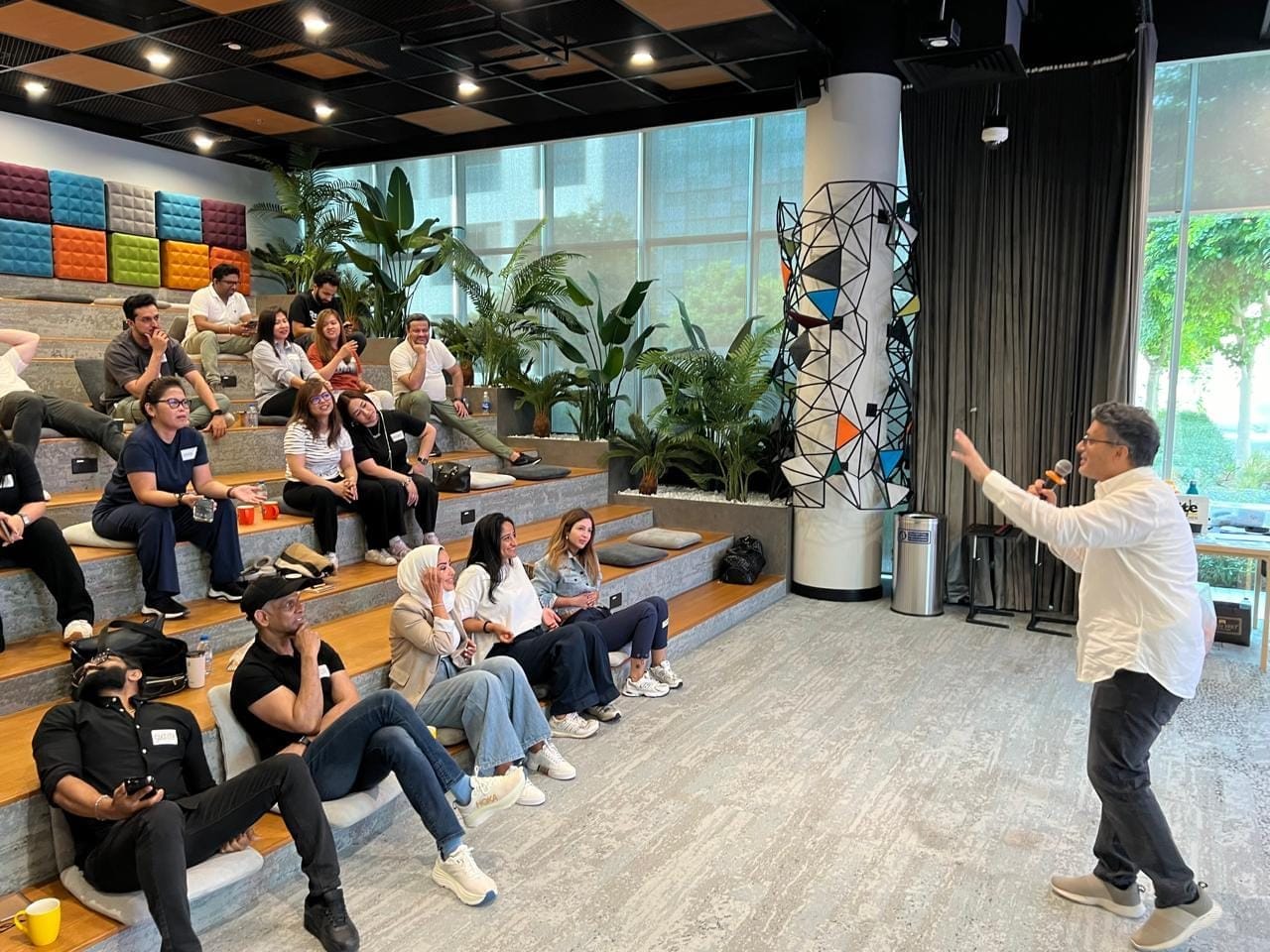
A team-building activity creates a good day and a moment of connection. Team development also changes how the team works the following week, so every exercise is done in collaboration and links back to real meetings, priorities, decisions and ownership.
How participants work
- Real workplace situations brought into the room
- Improvisation and Yes-And exercises that build listening and shared ideas
- Group decision-making and problem-solving exercises
- Role-based and cross-functional scenarios
- Guided team discussion, reflection and feedback
- A practical plan for applying the work back at the desk
The W.I.S.E. Compass guides how people treat one another throughout the work.
Words with Courage
Raising the risk, the concern or the disagreement while it can still help.
Intention with Clarity
Knowing the shared purpose, the priority and who owns what.
Silence with Conviction
Listening fully and reflecting before reacting.
Energy with Compassion
Respecting colleagues while holding responsibility and boundaries.
The return
Four values on the line.
What it costs when capable people work apart, and what becomes possible when they work well together.
Financial Value
Less rework, fewer repeated mistakes, and decisions reached in time to matter.
Time Value
Meetings that end with a decision and an owner, and priorities everyone can see.
Risk Value
Assumptions tested and concerns raised early, before they become costly.
Identity Value
A team known for collaborating well and keeping its word, with respect for every voice in the room.
Why Rohit
Teams that deliver together.
Rohit has facilitated team development for more than 30 years across 21+ countries, with people of 100+ nationalities, using improvisation, Yes-And and collaborative exercises alongside real workplace situations. He writes regularly on prioritisation, problem-solving and delegation, including how leaders build teams through trust.
“His expertise is considerable, and it helped our team come up with more efficient solutions on different projects.”
“…we were looking for a trainer who could not only bring out the importance of team work but also have the team understand that they can actually have fun doing the stressful jobs they do, if it was done in collaboration.”
“Rohit is a very good trainer, with high communication skills that enable him deliver quite good results.”
Who and when
Who commissions it, and when.
Usually commissioned by CEOs and owners, HR and learning leaders, operations directors, department heads and project leaders.
For
- Established and newly formed teams
- Cross-functional and project teams
- Multinational teams and teams across locations
- Operational, service and support teams
- Leadership teams working on how they work together
Often during
- A new team forming, a merger or a restructure
- Friction between departments
- Projects running late
- Meetings that run long and decide little
- Problems that keep returning
- A leadership offsite or a period of change
The training develops human capabilities alongside responsible leadership, so the scoping conversation also looks at structures, resources and ways of working.
How it works
Shaped around your team.
A half day, one day, two days, or a programme across several months, face to face or online.
1
Get in touch
Share your team, the situation and your timing, through the contact page, on WhatsApp or by email at roi@roitalks.com.
2
A scoping conversation
Rohit listens to understand the people, the pressure they face and the outcome you need.
3
A written proposal
The format, length and content of the lab, set out around your team.
Questions
Team development, answered.
What does the Team Development Lab cover?
Collaboration, across six connected areas: collaboration and communication, time and priorities, critical thinking, problem-solving, accountability and shared ownership, and trust with constructive disagreement.
Is this a team-building day?
It can include active, enjoyable exercises such as improvisation and Yes-And. Every activity links back to how the team works the following week: its meetings, priorities, decisions and ownership.
Can the lab focus on time management, critical thinking or problem-solving?
Yes. Each area can be given more time, depending on what your team needs most. The scoping conversation decides the balance.
How is it different from the Communication and Leadership Labs?
The Team Development Lab focuses on how a group works together: how it shares time, thinks, decides, solves problems and takes ownership. The Communication Lab focuses on the conversations themselves, and the Leadership Lab on the person leading.
How long is the lab, and is it face to face or online?
A half day, one day, two days, or a programme across several months, face to face in Dubai or at your location anywhere in the world, or online.
How do we arrange a session?
Get in touch through the contact page, on WhatsApp (+971 55 553 2275) or by email at roi@roitalks.com, and share your team, your situation and your timing.
Build the team that delivers together.
Tell Rohit about your team, the work ahead and where collaboration matters most, and he will shape the lab around it.
The other Workshop Training Labs
Public Speaking & Media Lab Communication Lab Leadership Lab Sales Lab Service Excellence Lab All six labs